- March 31, 2017
Sharing creates a virtuous cycle.
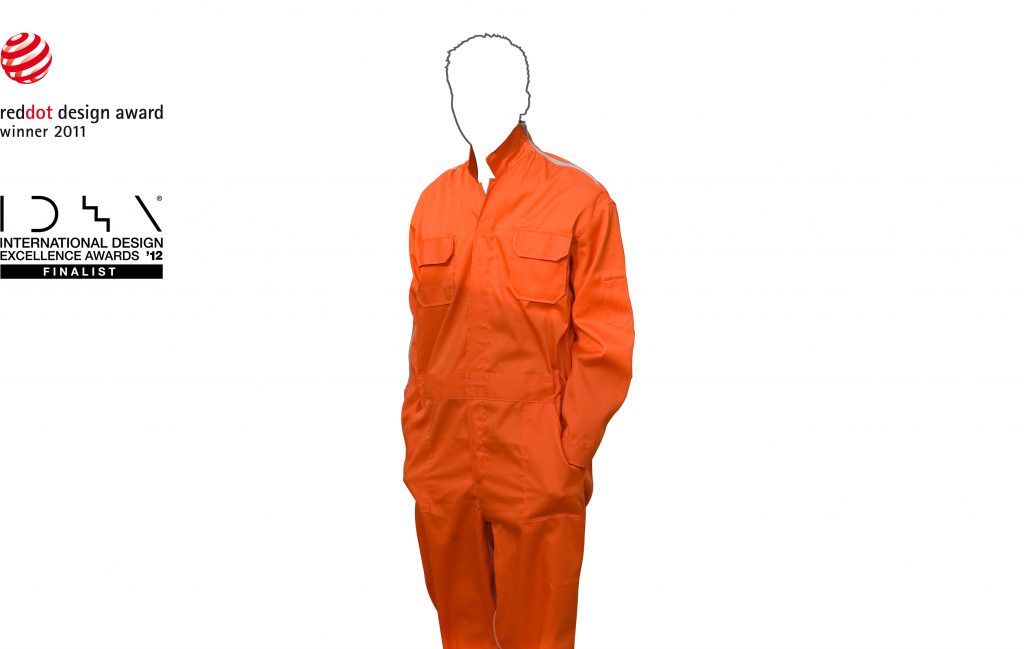
“Shareable Coveralls is a peer-to-peer sharing service that promotes cooperation within people in niche regions.”
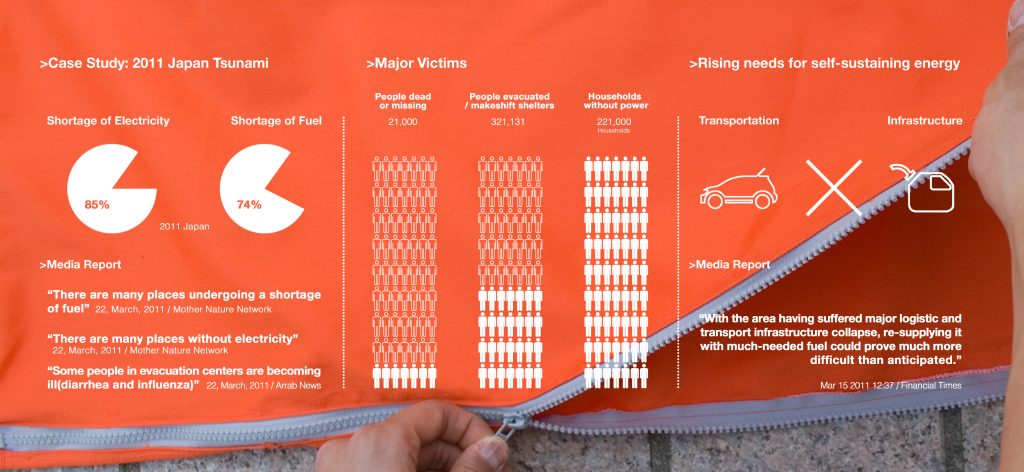
Survivors of natural disasters have a tough time whilst they are being rehabilitated. Sites that provide refuge are not always outfitted with basic, essential amenities. With electricity and fuel shortages looming around, providing asylum from cold and rough weather conditions becomes a pressing issue. Whilst it serves as an aid for the prevention of immunity declines or hypothermia caused by the cold inside the evacuation facility where heating is poor due to the lack of electricity and fuel, *it will ultimately lead people to cooperate with each other through sharing good.
Secondary Damage
A natural disaster is a natural event, such as an earthquake, flood, or hurricane, that negatively affects society, either through damage to property or through loss of life. A natural hazard is a disaster that has not yet occurred. Natural events are often referred to as natural hazards when referring to the general phenomenon, but they are called natural disasters when referring to a specific event, such as the 2004 Indian Ocean earthquake and tsunami or Hurricane Katrina. If a natural event does not pose any risk to human property or lives, it is simply a natural event; hazards and disasters only occur in conjunction with human society.
Whilst primary effects are the direct result of the natural disaster, such as collapsed buildings and water damage, secondary effects are the result of primary effects. Examples of secondary effects include power outages due to fallen trees or damaged building and fires from broken gas lines. In these examples, the fallen trees and the damaged building would be primary effects that caused the power outages and fires (secondary effects).
Material Science
The major value of Shareable Coveralls in a nutshell, is allowing users to have opportunities to be self-sufficient with electricity through cooperation within users at the evacuation facility. In the proposed scenario, some users contribute to generating energy during day time and others in need of aids can benefit from it to improve their level of immunity at the facility.
With Conductive yarn first of all, the fiber thus has the ability to heat itself, using kinetic as well as solar energy that are infused into it during day time. Secondly, the whole garment becomes heated in two minutes once Heatex, a self-heating smart fabric which has been placed inside the garment is activated. Through PCM (Phase Change Memory), heat and energy that have been generated by human movement (kinetic energy), and body heat are accumulated so they will be released when it gets cold. Last of all, by Flexible solar cell panel, which is adhered to the back of the garment, solar heat can be collected as an alternative source.
Scenario
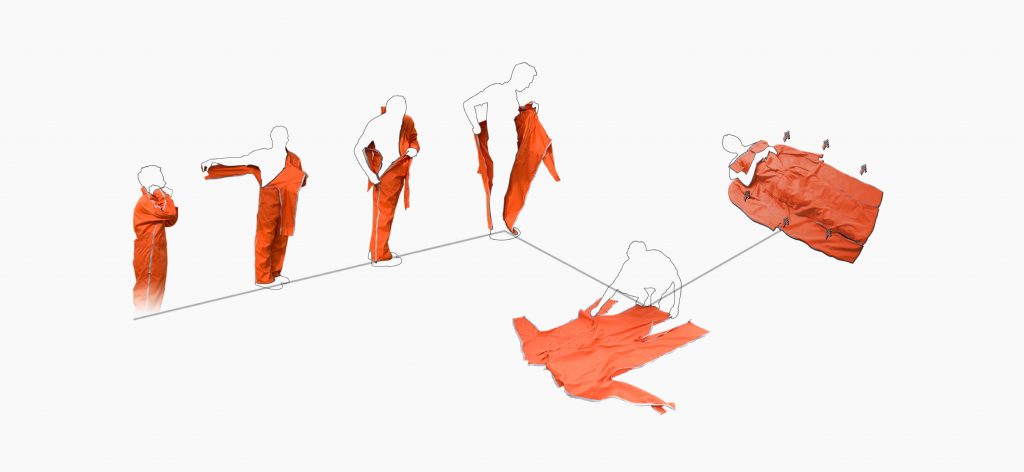
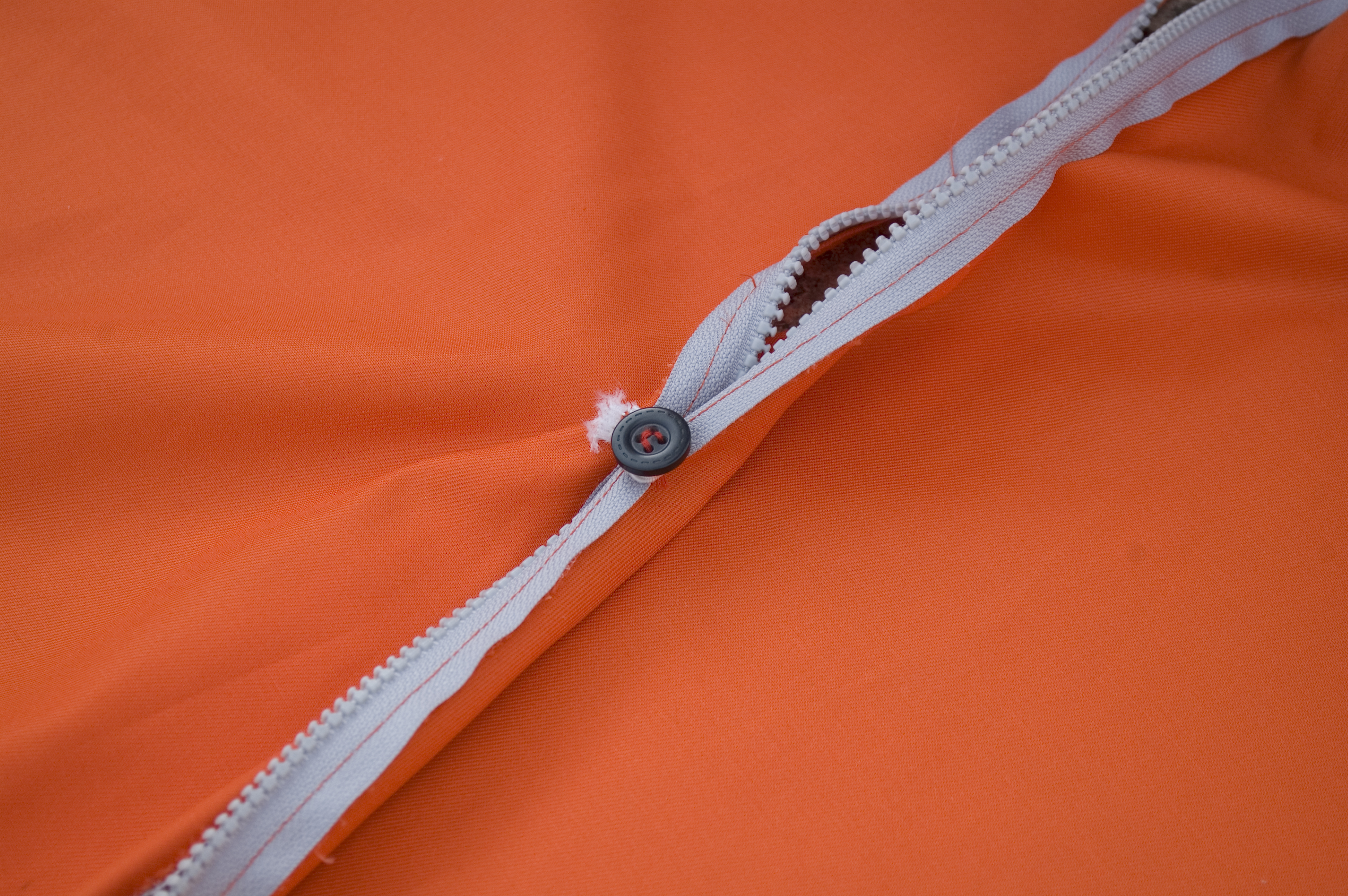
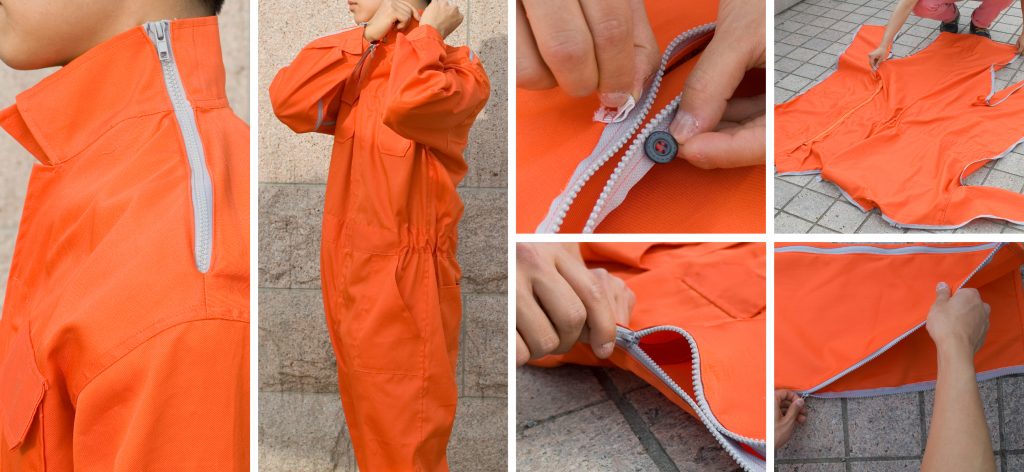
1) Start from your neck: unzip, starting from the zipper on your neck, and the one on the upper and lower parts of the right sleeves. 2) Lower the zipper down: once the arm becomes free, keep lowering the zipper all the way down to your legs. 3) Fix the both sides: fix the widened legs of the both sides with the buttons/Velcro. 4) What’s next: once it’s used as coveralls, it serves as a blanket for various purposes when spread. Heating will be made available in a few minutes, activating Heatex.